

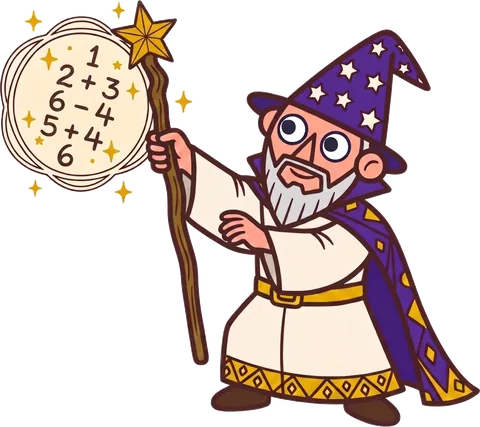
A number is even when you can split it into two equal piles exactly.
A number is odd when one pile ends up bigger or one is left over.
Imagine you are sharing candy between two people:
Does it come out even? → Even (e.g. 2, 4, 6, 8, 10)
Is one left over? → Odd (e.g. 1, 3, 5, 7, 9)
Can the number be shared fairly? The check marks shown give the answer.
Example
For parents
What does this exercise practice?
This task teaches one of the most basic ideas in number theory: children spot the pattern of even and odd numbers and can apply it to new numbers.
Common pitfalls
Children often spot the pattern (ends in 0, 2, 4, 6, 8 or 1, 3, 5, 7, 9) and apply it correctly, but do not understand the link to sharing. Show the splitting with real objects so the rule gains meaning.
How to practice at home
While setting the table, lay out cutlery together: two people each need one fork. Can we share 6 forks fairly? And 5? Everyday sharing makes the idea clear right away.
Related: Order numbers, Riddle