

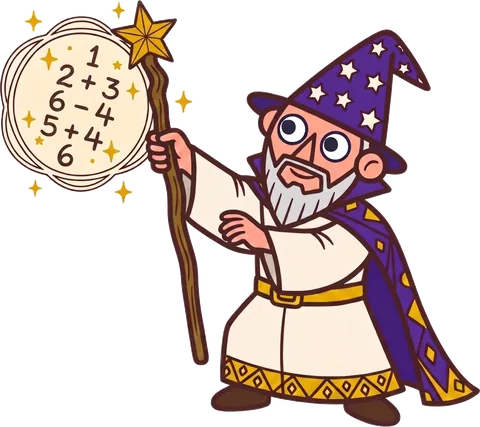
Every number has two neighbors, a number before it (one less) and a number after it (one more).
Sometimes the number in the middle is missing, find it!
The numbers shown give the answer.
Example
For parents
What does this exercise practice?
This task strengthens the understanding of number order and shows that every number sits in a fixed sequence before and after other numbers.
Common pitfalls
At the numbers 10 and 20 children often hesitate; the neighbors are then 9 and 11 or 19 and 21. Pay special attention to the tens boundary.
How to practice at home
Say a number and let the child name the neighbors. Whoever answers quickly gets a point. That makes the game lively.
Related: Number line, Order numbers